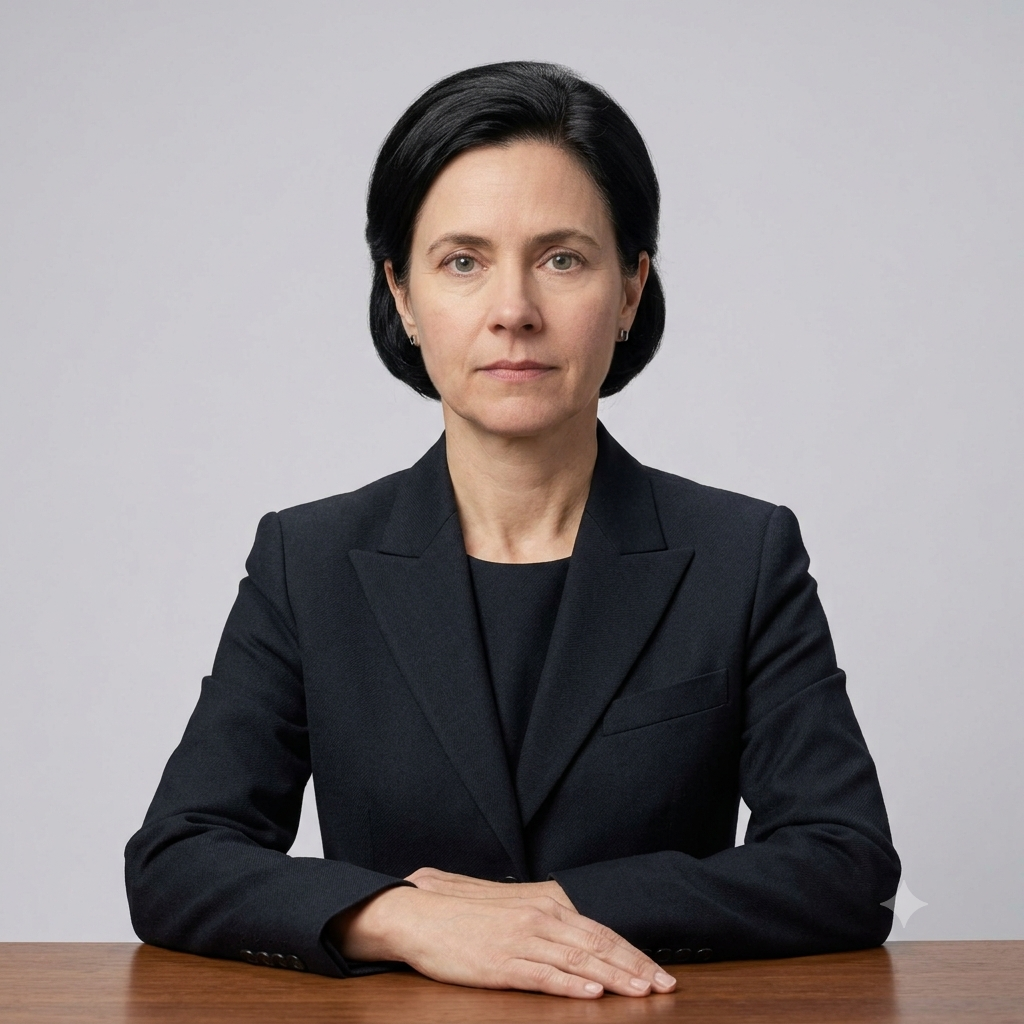
The Sunderland Interim Authority's response to Director Ines Carrow's Foreign Affairs Directorate inquiry arrived on a Tuesday, twelve days after she filed it, addressed to the Directorate's formal correspondence office and not to Carrow directly. It was three paragraphs. The first acknowledged receipt. The second described the matter as "noted and currently under review within the appropriate inter-authority channels." The third expressed the SIA's "continued regard for the diplomatic framework governing relations between the Interim Authority and the Federated Republic."
Carrow's three substantive questions — the current status of the officer who commanded the armed formation that crossed the Korda border marker, the chain of command that authorized the crossing, and whether the SIA was prepared to formally acknowledge the incident as unauthorized — received no answer, individually or collectively. The response did not reference the questions by number or topic. It did not indicate when a substantive response might follow.
"Twelve days to confirm they received a letter. The file is not closed. We will continue."
Carrow's statement, released through her Senate office within two hours of the response becoming public, was eleven words. She has filed a follow-up inquiry through the Directorate requesting a timeline for substantive engagement. Her office confirmed the follow-up is on the NRS.
What the Non-Response Means
Reading bureaucratic correspondence from a fractured governing authority at war requires a different interpretive frame than ordinary diplomacy. The SIA's response neither validated Carrow's framing of the crossing as a border violation nor rejected it. It did not claim the incident was authorized. It did not claim it was unauthorized. It cited a "diplomatic framework" that both parties know has been under informal suspension since Year 11. In that context, "under review" is not evasion for its own sake — it may be the most stable position available to an authority that has not resolved internally what the crossing was or who ordered it.
That reading does not help Carrow get answers. It does, however, give her something she can use: a documented record of asking, a documented record of receiving nothing, and a follow-up on the NRS that will generate another response or another silence, both of which are information. The file was always going to be slow. She is the one who opened it officially, and it now has her name on every entry.
The Field Responds
Assembly member Seren Mak, reached after a Rhovane district event, did not dispute the value of Carrow's inquiry. "Director Carrow was right to file. The response tells us everything we already knew about where the SIA is. The question for the next Legat Consul isn't whether to send letters — it's which constitutional tools you use when the letters stop working." She declined to specify which tools she had in mind.
Senator Pell Sandris proposed through his campaign that all LC candidates receive a formal Foreign Affairs Directorate briefing on the Sunderland file through the same constitutional channel Carrow used, so that "the Republic's diplomatic posture toward a neighboring authority in crisis is not shaped by who declared for office first." His office sent the proposal to the Directorate; no response has been received.
Senator Tobias Vael's campaign did not respond to a request for comment. It has been four consecutive days since Vael's office has commented publicly on any Sunderland-related development.
Elin Thoss, who has not declared for LC and whose office does not comment on foreign affairs matters, was not asked.